
The Adult Transformation in Montessori

Updated: Apr 24

Why Montessori Education Begins With the Inner Work of the Adult
When people first encounter Montessori education, they often notice the materials.
The wooden letters.
The golden beads.
The carefully prepared shelves.
But Maria Montessori did not begin with materials.
She began with the adult.
In The Absorbent Mind, Montessori wrote:
“The first step an intending Montessori teacher must take is to prepare herself.”— Maria Montessori, The Absorbent Mind
This statement is not metaphorical. It is foundational.
Montessori education is frequently described as child-centered. Yet it is equally adult-demanding. It asks something rare in modern culture: that the adult transform.
The Radical Idea at the Core of Montessori
Montessori’s early observations in the Casa dei Bambini revealed something revolutionary: when given freedom within a prepared environment, children naturally gravitated toward order, repetition, concentration, and purposeful work.
What disrupted this process was not the child.
It was the adult.
Adults interrupted concentration.They corrected prematurely.They imposed unnecessary help.They projected their anxieties onto the child’s pace.
Montessori realized that educational reform could not begin with curriculum alone. It required the adult to relinquish control.
This was not a soft idea. It was a radical one.
The Prepared Environment vs. The Prepared Adult
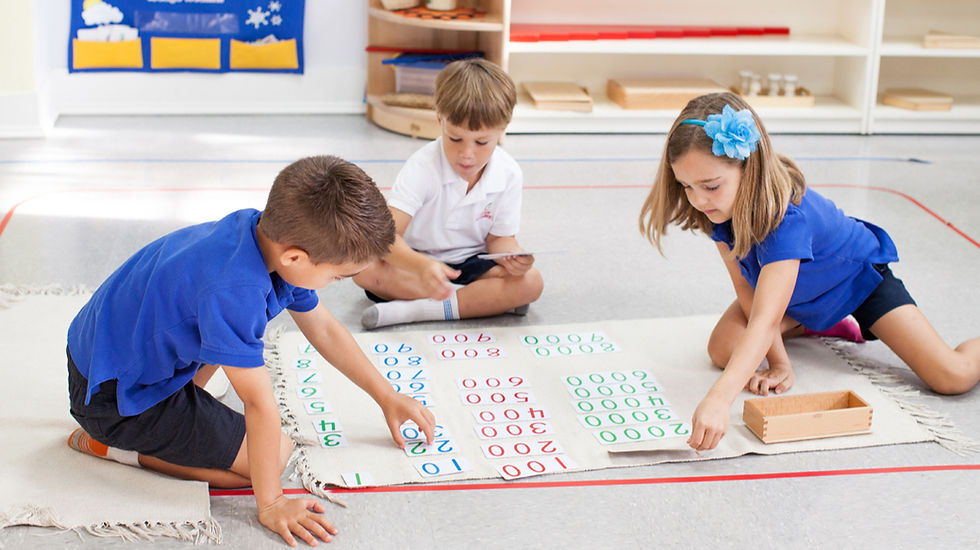
Most Montessori discussions focus on the “prepared environment.” AMS describes it as an environment intentionally designed to support independence, concentration, and exploration (American Montessori Society).
But the prepared environment is only effective if paired with a prepared adult.
Montessori wrote:
“The teacher must derive not only the capacity, but the desire, to observe natural phenomena.”— The Discovery of the Child
Observation is not passive. It is disciplined attention.
The prepared adult:
• Observes before intervening
• Interprets behavior developmentally rather than emotionally
• Waits for readiness
• Resists unnecessary praise
• Holds limits calmly
This level of awareness requires restraint. Something modern parenting culture does not often encourage.
The Neuroscience of Restraint
Contemporary research supports Montessori’s insights.
Studies in developmental neuroscience show that executive function, including impulse control, working memory, and cognitive flexibility, develops through practice and modeled regulation (Center on the Developing Child, Harvard University).
The practical Life area of the environment gives children the opportunity to develop this executive functions daily.
When adults react impulsively, over-direct, or over-assist, children are deprived of opportunities to strengthen these neural pathways.
Montessori environments protect uninterrupted work cycle precisely because sustained attention strengthens executive functioning.
But to protect concentration, the adult must resist interrupting.
And that resistance is work.
The Discipline of Not Helping
One of Montessori’s most quoted statements is:
“Never help a child with a task at which he feels he can succeed.”
This is often misunderstood as cold or distant. It is neither.
It reflects trust in the child’s developmental drive.
Research on intrinsic motivation (Deci & Ryan, Self-Determination Theory) confirms that autonomy is essential for sustained engagement and confidence. Over-helping undermines competence.
Montessori recognized this intuitively.
The adult must notice the internal question:
Am I helping because the child needs it, or because I am uncomfortable watching them struggle?
That question is transformational.
Ego and the Need for Immediate Results
Modern education and parenting culture are deeply outcome-driven.
We want visible progress.
We want measurable success.
We want affirmation that we are doing well.
Montessori requires patience with invisible growth.
Concentration is invisible.
Moral reasoning is invisible.
Self-regulation is invisible.
These capacities develop quietly through repetition and choice, not through performance.
Montessori cautioned:
“The greatest sign of success for a teacher is to be able to say, ‘The children are now working as if I did not exist.’”
This is not self-erasure. It is self-discipline.
The adult steps back so the child may step forward.
Boundaries Without Control
Montessori is frequently mischaracterized as permissive. In reality, it demands consistency and clarity from the adult. Freedom without limits is chaos. Limits without respect is control.
The Montessori adult holds boundaries calmly and predictably.
Research in attachment theory (Bowlby, Ainsworth) shows that children thrive when caregivers are both responsive and structured. Secure attachment forms not through permissiveness, but through predictable, attuned regulation.
Montessori environments reflect this balance:
• Clear ground rules
• Respectful tone
• Consistent follow-through
• Minimal emotional escalation
The adult regulates themselves first.
The Second Plane: Why This Matters Even More in Elementary
Montessori described ages 6–12 as the second plane of development. A period marked by moral reasoning, abstraction, and social awareness.
Children in this stage question fairness and justice. They evaluate authority. They test logic.
An unprepared adult reacts defensively.
A prepared adult welcomes inquiry.
Cosmic Education, the Montessori framework for elementary, relies on adults who can guide discussions, tolerate ambiguity, and facilitate research without dominating it.
If early childhood demands restraint, elementary demands intellectual humility.
The Home as an Extension of the Philosophy
Montessori is not confined to school walls.
The transformation of the adult extends naturally into parenting.
It appears when:
• You pause before correcting
• You allow extra time for problem-solving
• You observe patterns instead of labeling behavior
• You choose consistency over emotional reaction
Montessori parenting is not about replicating materials at home.
It is about cultivating awareness.
And awareness requires practice.
The Culture of the Adult at Village Montessori
Authenticity in Montessori does not begin with branding. It begins with adult integrity.
At Village Montessori, teacher preparation includes:
• Study of Montessori theory and child development
• Observation practice
• Reflection
• Continuous professional growth
We recognize that education is relational.
When adults model calm, discipline, and curiosity, children internalize those qualities.
Montessori is not simply a method.
It is an invitation for adults to grow alongside children.
Why This Is the Hardest and Most Important Work
Preparing a classroom is visible.
Preparing oneself is invisible.
It requires:
• Patience in the face of pressure
• Confidence in developmental timing
• Willingness to step back
• Courage to hold steady
Montessori believed that societal change begins with the child.
But she understood that the child flourishes only when the adult evolves.
And that evolution is the quiet revolution inside Montessori education.
References
Montessori, M. (1949). The Absorbent Mind.Montessori, M. (1912). The Montessori Method.Montessori, M. (1948). The Discovery of the Child.American Montessori Society (amshq.org) – Montessori Philosophy & Child DevelopmentCenter on the Developing Child, Harvard University – Executive Function ResearchDeci, E., & Ryan, R. – Self-Determination Theory


Comments