
From Spoken Spanish to Reading and Writing
- village90
- Jul 29
- 2 min read


Spanish immersion provides children with benefits that extend far beyond learning to speak another language.
Before children learn to read and write, they need a strong foundation in spoken language. They need opportunities to hear precise vocabulary, participate in conversations, listen to stories, sing songs, and express their own ideas.
These experiences are naturally woven into the child’s day in the Montessori enviornment.
Language Grows Through Relationships...
Children naturally want to understand the adults who greet them each morning, comfort them, share stories, sing songs, and introduce new classroom activities.
This emotional connection gives language meaning.
Music also plays an important role in the process. Songs allow children to hear vocabulary repeatedly, recognize sound patterns, develop pronunciation, and remember new words in a joyful way.
When music is combined with movement, stories, conversation, and purposeful activity, it becomes another powerful pathway for language development.
Authentic immersion is much more than teaching vocabulary. Language becomes part of the child’s daily life.
The Montessori Path to Literacy:
Spanish is a highly phonetic language. Its letters and sounds tend to follow consistent patterns, allowing children to form clear connections between spoken sounds and written symbols.
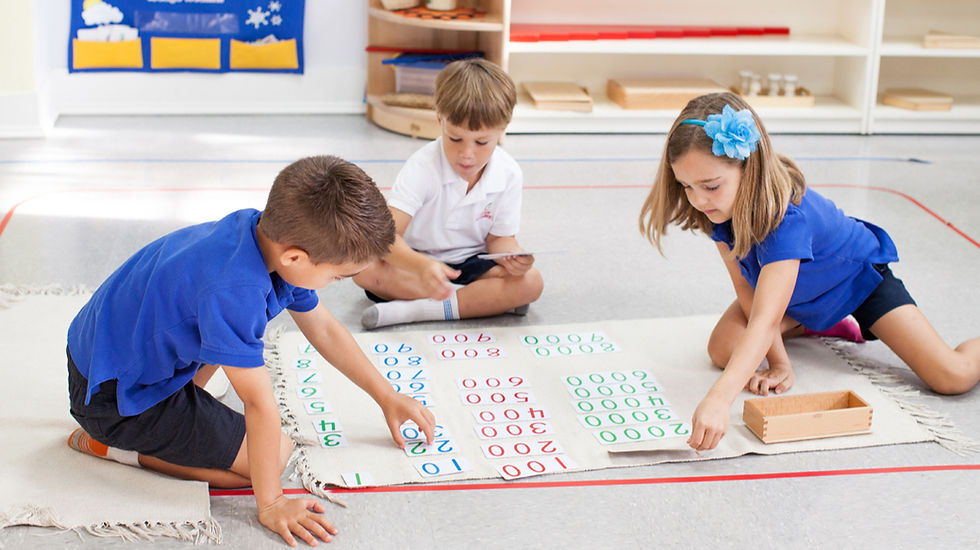
Within the Montessori classroom, guides prepare children for literacy through hands on materials such as the Sandpaper Letters, the Moveable Alphabet, and phonetic reading activities.
Children first experience rich spoken language. As their awareness of individual sounds develops, they begin connecting those sounds with written letters.
The Sandpaper Letters allow children to see, hear, and physically trace each letter. The Moveable Alphabet then gives them the opportunity to build words and express ideas before their hands are fully prepared for writing with a pencil.
Reading becomes a process of discovery rather than memorization. Each success strengthens the child’s confidence and encourages further exploration.
At Village Montessori, our goal has never been simply to teach Spanish. Our goal is to create an environment where children can naturally absorb another language during one of the most extraordinary periods of human development.
Through language, children gain more than vocabulary. They develop confidence, flexibility in thinking, cultural awareness, and a lifelong foundation for meaningful communication and connection.


Comments