
Why Montessori Matters from Birth

The first environment a child encounters shapes their relationship with the world outside the family. From birth, infants are actively discovering their surroundings, developing trust, building relationships, and learning through movement and exploration.
As Montessori did, we recognized that these earliest experiences deserve the same care and attention as every other stage of education. Our Nido, the Montessori environment for infants from 3 to 16 months, is thoughtfully prepared to honor the important development taking place during this period.
The Spiritual Embryo
“The child...is a spiritual embryo which needs its own special environment.”— Maria Montessori, The Secret of Childhood
Just as the physical embryo develops within the protection of the mother's womb, the infant needs an environment that supports the formation of personality, movement, language, emotions, intelligence, and will.
As parents, we often celebrate the first smile, the first time our baby rolls over, or those first steps. Yet long before these milestones, an incredible amount of learning is already taking place. Every experience and interaction is helping the child construct the person they will become.
Our responsibility as adults is to respect and support this natural process.
A Prepared Environment That Supports the Developing Brain
Walk into an authentic Montessori enviroment, and you will notice something different.
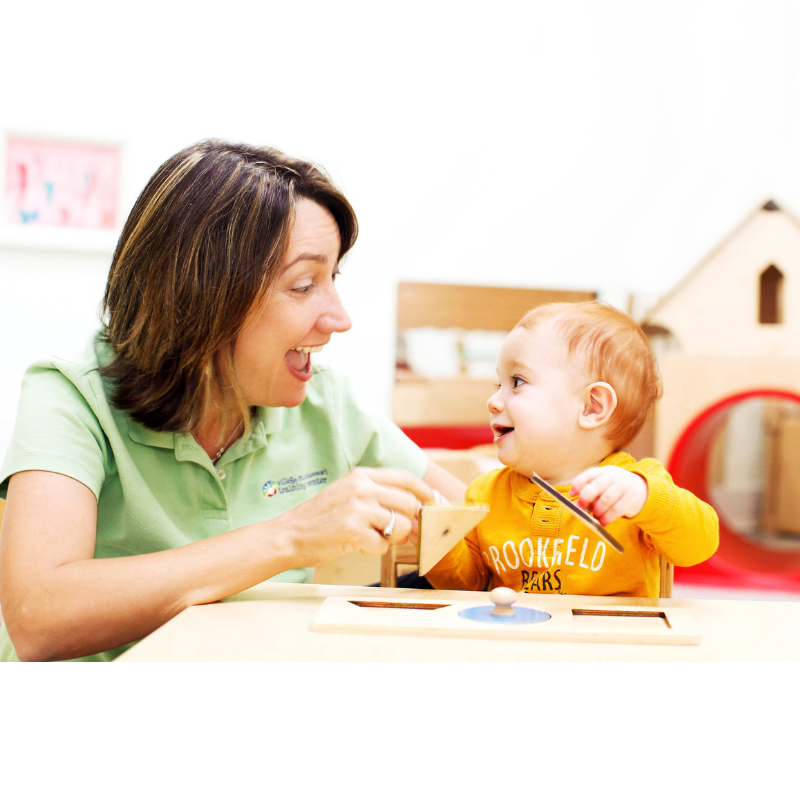
The space is peaceful, orderly, and designed from the infant's perspective. Low shelves, open floor areas, natural materials, and carefully selected objects invite exploration without overwhelming the senses.
During these early months, the brain is developing at an amazing rate, forming connections called synapses through everyday experiences. Opportunities to move, touch, grasp, and explore contribute to this process.
Think about the moment your baby reaches for a toy, brings an object to their mouth, or makes repeated attempts to roll over. These simple actions are helping the child discover the world, develop coordination, and build connections in the brain.
Freedom of movement supports the development of the will
When a baby sees an object, decides to reach for it, and makes the effort to grasp it, the child begins to translate intention into purposeful action.
This is why the prepared environment matters. By allowing infants to explore freely and safely, we support both their physical and cognitive development.
And perhaps most importantly, we give them the opportunity to experience the satisfaction of doing something for themselves.
Each new discovery builds confidence and reinforces one of the earliest expressions of the developing child: "I can."


Comments